Tuesday, October 06, 2009

Valley of Death Subgroup Meeting

This month's Valley of Death Subgroup meeting will be at Waterloo Ice House on 38th St., 10/12 at 6:30pm. We are pleased to have successful entrepreneur Anurag Kumar as our guest speaker.

Over the past 20 years Anurag has started and built technology and services companies in the U.S. and India. His most recent venture, AVK Global, is dedicated to helping businesses find green solutions to energy and resource issues. Moreover, Anurag continues to be an active mentor to people who want to start and grow their own companies.

As an added bonus, the members of TiE have been invited to this month's meeting. Thus there will be an excellent opportunity to meet other entrepreneurs. Come prepared to discuss this month's Bootstrap principle: constraint creates innovation (twitter: #concreanovate) Please RSVP via Facebook.

You may learn more about Mr. Kumar at www.anuragkumar.com

Please contact me at wdfloyd at gmail if you have any questions about this meeting.

Thanks,

Dave Floyd

VoD Co-Lead

Monday, October 05, 2009

Bootstrap Experience visits The Apple Store

The Bootstrap Experience subgroup has explored the Hideout Theatre, RunTex and the Alamo Drafthouse, each time asking the question: "what makes this place so exceptional at creating a lasting, favorable experience for its customers?"

This month join Bijoy and Heather as we share the Bootstrap Experience Model inside the Apple Store at The Domain. Our friends at Apple have offered us an exclusive after-hours tour to explore the service-excellence that is known worldwide as the "Apple Experience." For those who want to continue the discussion afterwards, we'll wander down to a nearby watering hole in the Domain.

Sunday, October 18 from 6:00 - 8:30 pm
The Apple Store at the Domain
http://www.apple.com/retail/thedomain/

Space is limited to the first 35 people that commit to join. Please only RSVP if you are certain to make it, and change your RSVP if circumstances change!

Link to Evite for RSVP: http://tinyurl.com/y9hacdz

Thursday, October 01, 2009

The Inner Journey and the Road of Trials

It is by going down into the abyss that we recover the treasures of life. Where you stumble, there lies your treasure. - Joseph Campbell

The Bootstrap Journey has been likened to the Hero's Journey, popularized by noted mythologist, Joseph Campbell in The Hero with a Thousand Faces. The hero's journey is a recurring aspect of humanity's story-telling tradition. The Hero's Journey is a monomyth, an archetypal story with a specific pattern of events. Classic examples from ancient times include The Odyssey and the stories of Buddha and Christ. More recent monomyths include The Wizard of Oz, Star Wars, The Matrix, and The Lord of the Rings.

Bootstrappers answer the Call to Adventure in the Ideation stage and cross the threshold onto the Road of Trials when they enter the Valley of Death. Entering the valley of death is an initiation. As with all initiations, once the hero crosses the threshold of death and rebirth, the personal metamorphosis has begun and their world is forever changed.

On the Road of Trials, the hero meets a succession of challenges and ordeals. Some of the experiences may be uncomfortable, others terrifying. The heroic Bootstrapper faces the dragons of fear and insecurity and the monster that is the Shadow Self, time and time again. Some battles are won and some are lost. Patience, persistence, and a willingness to tolerate uncertainty and physical and emotional discomfort are essential.

Part of the hero's quest is the discovery of their true self. The hero navigates the Road of Trials and experiences the death of the false ego. The false ego is a reflected center. When we are young, our sense of self develops through the eyes and words of others, a distorted perception not unlike mirrors in a fun-house. The psychological term for a person's perception about what causes good or bad in one's life is locus of control. A person with an external locus of control attributes what happens in their lives to external forces (i.e. people, events, chance, the Divine). People who have an external center sometimes feel victimized, dissatisfied, and depressed by life events. People who develop a strong internal center feel they have some control over what happens in life, that their actions and attitudes make a difference. People who accept personal responsibility are more likely to meet challenges head-on. Research shows that successful entrepreneurial leaders have a strong internal locus of control.

Although the hero's journey is personal, they are not alone. They always have allies. One of the delightful and beneficial aspects about Bootstrap is its community, which includes the discovery of all kinds of allies: wise mentors, courageous peers, and energetic neophytes. With a little help from their friends, the hero eventually navigates the Road of Trials and comes out on the other side wiser, more authentic, and farther along the path of self-actualization.

Meet new allies that can support you and your (ad)venture at the Inner Journey subgroup meeting on October 14th, at 7p. I will be your guide for gentle yoga and a deep meditation on nurturing a relationship with your true self. After the meditation, we'll share another delicious potluck dinner and talk about how to nurture a powerful and enduring internal center. Please RSVP to the Facebook invitation. Join the Inner Journey yahoogroup to receive invitations directly to your email. Feel free to invite your friends.

Friday, September 25, 2009

Larry Ellison interview - insight into a bootstrap founder/CEO

Larry is the cofounder of Oracle and incredibly, has been at the helm of his company for 30+ years. Longevity, both of companies and founders, is a hallmark of bootstrap ventures.

Along with Bill Gates and Steve Jobs, he's one of the old school bootstrap tech founders who continued to be at the top of their game for that long. In this far-ranging interview at the Churchhill Club he expounds on many topics. While the interview is insightful and entertaining in its entirety, below are some highlights. To get a perspective into Steve and Bill, check out the excellent interview from the WSJ D Conference two years ago.

The first part offers an insight into how he approaches both his business and other pursuits, chiefly sailing. Larry is a competitor whose efforts have always been focused with a worthy competitor on hand. Later on he explains how important it is to pick the right competitor because you often become just like them!

He goes on an entertaining rant debunking "cloud computing" (45:50 to 50:11) and the overall faddishness of the computer industry. I'm reminded of Clockspeed, by Charles Fine, a deeply insightful book on the repeating cycles of all industries, which pulsate between periods of specialization and integration. Fine argues that the bicycle industry is the "fruit fly" of business: due to its fast cycle time, it allows researches to identify the larger trends within all sectors. Larry makes a good case that the computer industry also travels quickly through its cycles. (A similar theme emerges from the Gates/Jobs interview.) Regardless of the trends, he clarifies that fundamentals always remain the same.

Beginning at 51:48, he discusses network computing and how it needs to be as simple as other networks like water and electricity, where the complexity is "within the network" and hidden from any device (like a top or plug point) that connects to it.

When asked about Microsoft (55:00) we get an insight into how he sees the technology landscape and competitors (and why MSFT is not Oracle's primary competitor; rather it's IBM). This response also shows how Oracle continues to focus down into its core QUEST(ion), even as it expands with many acquisitions, including SUN. BTW, what is Oracle's QUEST(ion)? It shows up early in the interview with his discussion of sailing and continues throughout.

Other snippets:
  • One decision he'd take back: 1:02:55
  • Advice to entrepreneurs starting out: 1:03:45
  • On his legacy: 1:06:45 - he doesn't see the end of the QUEST(ion), it just continues, another theme echoed in the Jobs/Gates interview
His response at 1:16 and again at 1:21, shows his continued and deep expertise in the minutia of his business. Larry, as with all great bootstrap founders has a deep passion and knowledge of his field.

Thursday, September 17, 2009

What Makes Austin Unique?

Reposted from ATX Equation

It has been almost a year since the ATXequation conversation began. Taking this moment to reflect on the frequently asked questions we get these days as the word begins to spread. Mostly "What are you doing exactly?" and "Why?"

We continue to explore our original question - what makes Austin special? We're intrigued by the many different discussions this one question prompts - and even more interested in the common thread woven across those answers. ATXequation was borne out of a desire to test the strength of that thread and witness the pattern of the fabric it weaves.

So we've been asking the question and sharing the various answers -- and our hypothesis on their commonalities. For example, we believe that Austin's uniquely-designed experiences and our rich, diverse communities combine to create lasting and powerful "scenes" that make Austin the thriving, vibrant city it is. Some say those scenes have just sprung up organically over time, that there is no method or science to how they've generated themselves. We think that scene-making can be deconstructed to inform those of us who want to continue Austin's legacy of being the best place to live. We think the "how" is important for those Austinites (and others) who are investing themselves now, or will invest themselves as future stewards of our city. Stewards who understand that a strength like Austin's isn't about happenstance, but a unique and special combination that -- like any good recipe -- is improved with each chef that attempts it, but always begins with a set of key ingredients. Thus, the equation: Experience + Community = Scene.

We've been evangelizing about Austin, because that's what we're good at. And people like to talk about it. Spreading the word about how to "make a scene" means encouraging people to elevate their thinking from an isolated, individual or singular community perspective to the scene mentality -- a mindset that means looking across a set of related communities to find what they have in common, and what they don't. By doing this, we can create quicker synergy, collaboration and results for the city we care about so deeply. Since we began, more than a dozen "scene mappers" have stepped up to document the many communities that make up Austin's scenes: music, arts, technology, entrepreneurship, non-profit and many other scenes are literally being mapped to reveal the connecting points, and places of disconnect. Because the mappers hope that by drawing the dots they'll learn more about how to connect them into a stronger scene. One that is aware of itself as such and sees the power and value in the collective. So far, the "ahas" of the scene mapping process have been many. "Oh really, you're doing that too?" "Why didn't we know about each other sooner!"

So we've been leading the mapping, and we've been talking. Alot. With individuals at first, and now more with groups. I think the first in December '08 was for about 15 people in the backroom at Marie Calendars. Today was more than 90 at the AT&T conference center. Group size keeps growing, and the invitations keep coming. Feedback we receive is that people are intrigued by the equation. Because there is something in the language of scene-building that gives voice to that which they already knew, but weren't sure how to articulate. That in the endeavor of understanding the special nature of our town they feel connected to something larger than themselves. Something they've wanted to be a part of, but just weren't sure how. And so far each audience, no matter how varied, seems to have a way to connect the concepts to their own activities or needs. It's a portable, universal model which Bijoy will tell you is the best kind. What matters most to me is that people are finding meaning and value in the conversation. And so it continues.

To what end is all of this? Who knows. Perhaps it's best there not be an end, but a constant exploration of the creativity and inclusivity that makes Austin Austin. We can't bottle such a process, but we may be able to distill it's essence just enough for Austinites everywhere and maybe even those outside our fair town to take a sip and not only enjoy, but understand, and begin to share the formula.

The starting QUEST(ion), "What makes Austin special?" has morphed into the real question: how do we steward Austin on its journey? Ours was an impulse of stewardship for the city and our real intent is that you take on the office for yourself. It's up to you to be a steward for Austin in whatever way you can imagine - whether that's within or outside of the Atxequation initiative itself. Our job is to lay the groundwork with the model - the "real work" of stewardship is up to you!

Thursday, September 10, 2009

You're a little company, now act like one

This article originally appeared on A Smart Bear: Startups + Marketing + Geekery.

I talk to a lot of companies that are still hunting for customer #1, or a few sales have been made but the ball isn't rolling yet.

Most of them are making the same mistake: Their public persona is exactly wrong.

I know, because I made the same mistake! But I learned my lesson, and I'd like to share it with you.

Even before I had a single customer, I "knew" it was important to look professional. My website would need to look and feel like a "real company." I need culture-neutral language complimenting culturally-diverse clip-art photos of frighteningly chipper co-workers huddled around a laptop, awash with the thrill and delight of configuring a JDBC connection to SQL Server 2008.


It also means adopting typical "marketing-speak," so my "About Us" page started with:

Smart Bear is the leading provider of enterprise version control data-mining tools. Companies world-wide use Smart Bear's Code Historian software for risk-analysis, root-cause discovery, and software development decision-support.

"Leading provider?" "Data mining?" I'm not even sure what that means. But you have to give me credit for an impressive quantity of hyphens.

That's what you're supposed to do right? That's what other companies do, so it must be right. Who am I to break with tradition? Surely my potential customers would immediately close the browser if they read:

Hi, I'm Jason and I built an inexpensive tool for visualizing what's in your version control system. It's useful for answering questions like "When was the last time we changed this file?" Check it out and tell me what sucks!

I mean, can you just imagine a person with "Software Engineer III" on their business card taking me seriously if I just talked like a human being? What if someone gets offended by the word "sucks?" No no, big companies want to see professional language!

But I was wrong. I'll explain why from the point of view of selling software over the web, but the same lesson applies to every little company trying to get off the ground.

Now repeat after me:

My next sale won't be a 1000-seat order from Lockheed Martin.

I'm telling you this having sold software to every size of company from micro-ISV to IBM, and, well, to Lockheed Martin.

Your vision is to land $100k deals with big companies -- and you will! But not today. Today your product is a shaky version one-dot-oh with bugs you haven't uncovered yet, missing 80% of the features big companies require, and with no significant documentation like case studies or a proper manual or an ROI model or a large, reference-able customer.

Today, you're a complete mismatch with Lockheed Martin! But there's a nice big niche that's a perfect match: Early Adopters.

Early Adopters are people who want to live on the bleeding edge. They like new technology, even if that means it's buggy. They like working with teeny companies where they have a personal relationship with the founders, where they are showered with attention, and where their ideas are implemented before their very eyes. They don't mind putting up with a hundred bugs so long as they get fixed fast. They want to be involved in the process.

Tom is an Early Adopter. At Smart Bear I must have had ten or twenty of these guys before our product was stable enough and feature-rich enough to start getting attention from the big boys.

The best part is, this is exactly the moment in your company's life when you need Early Adopters to help you build the right product! You don't need people who download, get discouraged, and then never call you back. You need a chatty Cathy who wants to dive in and help out.

So now back to your website, your blog, your Twitters -- your public corporate persona generally. What do you put up on your website that screams out to those potential Early Adopter Cheerleaders that you are exactly what they're looking for: A cool new company with a fresh product and fresh attitude; a product that might be rough around the edges but is ripe for feedback and collaboration; a company that may be small today but is thinking big.

Well here's how not to it: Say "a leading provider of" and blather on about how you "Provide the ability to quickly and easily do XYZ so you can go back to accomplishing high-value tasks."

Puh-leeze. Can you be more uninspiring?

Balsamiq Studios is doing it right. Read their company page. It's says "Hello." It says "Yes, a couple of guys in a studio." They don't skirt the issues of being a small company:

I know, it sounds iffy: how can such a small team create, test, maintain, market, sell, and support a software company?

Well, that remains to be seen.

Balsamiq made $800,000 in their first year of operations, so don't tell me "big companies" need to hear garbage PR/marketing language. Balsamiq got 100 product reviews during their first six weeks of operation, so don't tell me "a couple of guys in a studio" isn't a good public persona.

You want that kind of success? Stop acting like a faceless, humorless, generic, robotic company!

Put yourself in the shoes of that Early Adopter. Does she want to see useless garbage phrases or does she want to hear about how you totally understand her pain? Should you come off as a big, established, safe company or as a cool, passionate, small team who wants to make a difference? Should you hide behind "Contact Us" forms or display your phone number and Twitter account on your home page? Should you promote features and benefits you don't really have implemented yet or should you promote your forums, blog, and weekly all-customer virtual meeting where everyone chimes in with feedback?

Be human. Stop hiding. Be yourself.

What do you think about how small companies should present themselves to their customers? Is it appropriate to be informal or is formality needed? Leave a comment!

Thursday, September 03, 2009

Food for Thought: Cooking with Bootstrap

Cooking without a recipe is a lot like bootstrapping.

At my home, we frequently head into the kitchen to make dinner without anything specific in mind. We take a look around to see what ingredients we have on hand. Being a Bootstrapper, I realize I'm in ideation and apply the principle, use everything by looking for ingredients in the refrigerator, pantry, garden, and of course, my imagination.

If I engaged in this process today to create a demo, um, dish, I would head to the fridge looking for something fresh as a foundation. Those spicy roasted green chilies are perfect. What other veggies would pair well? Perhaps an onion and some garlic? Next stop is the freezer. After sorting through the frozen veggies, I find the perfect main ingredient, an organic chicken. Can it be enchiladas? Off to the pantry. There are no tortillas and no rice. There are some tortilla chips and dried posole. Eureka! We also have just the right spices, a few limes, and even cilantro in the garden.

Time to choose another essential element: the container. The soup pot is the container of choice for the posole. The Bootstrap subgroups and the community as a whole serve as a container while you cook up your own business.

Experience and the overall Bootstrap principle, right action right time, guide the process. First the posole is soaked and then set it on the backburner to simmer. In a separate pot, I create a stock with the onion, garlic and chicken. Once the stock is done, it's time to add the green chilies, spices, posole and simmer again.

Patience is a key ingredient in the process that many forget. In any creative process, there are natural periods of activity and inactivity. Just like a great soup can't be rushed, creation of a business takes time. Experience and taste will let you know when it's ready. Scoop out a heaping bowl of goodness for yourself and your friends, top with a few chips, cilantro and a squeeze of lime. Soup's on!

An interesting Inner Journey exercise is to reflect on your internal creative process. Consider one of your own creations. How do you choose what ingredients to include? What resources do you tap that help you choose a direction? Intuition? An idea? A feeling? A sensation? Previous experience? What patterns do you notice in your unique process? Have fun exploring!

Please join me and say welcome to my new Inner Journey co-lead, Brandy Rainey-Amstel. She brings a wealth of bootstrap knowledge and experience as well as a passion for the inner journey.

Join the Inner Journey Subgroup on September 9th at 7p for a hands-on opportunity to exercise your creative process. Brandy will show us how to create a vision board. Whether your dream is a bubbling possibility or a dawning reality, a vision board can help to identify your vision and give it clarity, reinforce your daily affirmations, and keep your attention on your intentions.

It will be a potluck, so bring please bring food and/or your favorite beverages to share. For more information, join the Inner Journey Yahoogroup, check out the evite or email me at ellen AT ellenfriedman (dot com).

Bootstrap Style Subgroup September: Matt Swinney

We are very excited about this month's meeting with Matt Swinney founder of Launch 787 and the Fashion Week Austin.

Our meeting is Tuesday September 8th at Waterloo Ice House (38th/Lamar). The meeting will start at 6:30, with a half-hour social time, followed by content. In this case it will be discussion of this month's principle, Use everything, for about 15 mins, then Matt will speak to the group. Matt will speak about Fashion week - what happened with the event and the community that rose up around it, and what the future plans are for it. We will have a discussion of ideas and a Q&A afterward, then around 8:30 we will break for more social time and discussion.

The Bootstrap Style Subgroup seeks to gather a community of entrepreneurs in the Fashion industry in Austin to learn from each other, share experiences, and draw from outside sources and speakers to make each of our endeavors successful. We plan on having a wide variety of speakers, events, and learning opportunities, as well as reaching out to the larger Austin community.

Charter/Mission

The Style Subgroup seeks to create a forum for entrepreneurs in the style/fashion/beauty community to help each other reach their goals in furthering the success of their business endeavors. This group encourages its members to define and create success on their own terms by helping each other and drawing upon resources within and outside the bootstrap community. The Style Subgroup acts as an informal nexus for the various style entrepreneurs and organizations within Austin to harness and leverage each others' passions, strengths, and ingenuity.

We are part of the larger Austin Fashion Scene and are committed to stewarding it and making it easy to find resources and support.

RSVP on evite or facebook!

Learn about TechRanch from founders Kevin Koym and Jonas Lamis

keep watching...right till the end! :)

Friday, August 28, 2009

Hot Spots. Hot Issues. Get Connected. Build your Business.

Join Leadership Austin on Wednesday September 2 at 5:30 pm at Four Seasons TRIO wine bar to learn more about the upcoming fall Experience Austin program. To RSVP please email ckrejs AT leadershipaustin DOT org


As a business leader in this economy it's critical to be connected, to understand who the decision makers in the community are, and to demonstrate to your customers that you use their dollars in a sustainable way to help the community. Experience Austin is ideal for entrepreneurs, small business owners or anyone who values networking and a deep understanding of their community as critical for success. Participants leave with a greater love for Austin and local connections that will enrich both their personal and professional lives.


The program is presented as a five session survey of Austin, including behind the scenes tours and introductions to leaders in the local government, economic, education, healthcare, arts and entertainment communities. The final session features Bootstrap founder Bijoy Goswami and Experience Sub-group co-lead Heather McKissick as keynote speakers on the Austin Equation.


"When you leave an "experience" with a new-found sense of empowerment, you know you've found something special and life-changing. Experience Austin is all of that and more."

Nathan Guitrau, National Instruments, spring 2009 participant


Join us for drink specials, networking and a chance meet past program participants who will share their experiences and why this program is a can't miss. Appetizers will be provided. A $50 discount will be applied to all registrations received on site.


When: Tuesday, September 2 (5:30 p.m. - 7:00 p.m.)

Where: Four Seasons TRIO wine bar, 98 San Jacinto Blvd


To RSVP please email ckrejs AT leadershipaustin DOT org

Wednesday, August 26, 2009

BOOTSTRAPPERS SEEK TO ADD DEPTH, VARIETY, & LOCAL FLAIR TO SXSWi 2010

by Maura Thomas

Members of local entrepreneur organization Bootstrap Austin have made a strong showing in panel submissions for next spring's South by Southwest Interactive Conference.

Support these local entrepreneurs by clicking on the links to vote for their panels. Public support is 30% of the weight given when panels are chosen, and this year's competition is fierce, with over 3,000 panels submitted, and only room for 300 sessions. Panel voting ends September 4th.

Following are the panels that have been submitted by Bootstrap Austin members, alphabetically by Bootstrapper/presenter last name.

Karen Bantuveris, VolunteerSpot: Doing Good Online: Mobilizing Community Action - http://panelpicker.sxsw.com/ideas/view/4906

Greg Bright : Get Top Ranking on Google and Other Search Engines - http://panelpicker.sxsw.com/ideas/view/2657

Michael Drapkin, Anime Winds: Symphonic Rockstars: Mainstreaming Traditional Virtuosity - http://panelpicker.sxsw.com/ideas/view/2689

Michael Drapkin, PrismNet, Ltd.: Thinking Like An Owner - Starting Your Interactive Enterprise - http://panelpicker.sxsw.com/ideas/view/2658

Lou Ellman, RoyaltyZone: The Tangled Web of Artist Royalties - http://panelpicker.sxsw.com/ideas/view/4257

Aruni Gunasegaram, entrepreMusings: Online/Offline Networking in the Social Media Age - http://panelpicker.sxsw.com/ideas/view/2851

Danny Gutknecht, The Heuristic Soul - How Can Authentic Communication be Social and A Pragmatic Approach to Wild Creativity: http://budurl.com/zqa7

Brian Massey, Conversion Sciences: What Is Your Social Conversion Rate? - http://panelpicker.sxsw.com/ideas/view/3531

Brian Massey, Conversion Sciences: Bigger Online Projects Through Personas - http://panelpicker.sxsw.com/ideas/view/3569

Matthew McCabe, Austin Social Innovation Hub: Social Apps To Save The World - http://panelpicker.sxsw.com/ideas/view/4667

Maura Nevel Thomas, RegainYourTime.com: Win the War Against Information Overload - http://budurl.com/9v4l

Pat Scherer, The Detail Person: Slacker Website Triage: Addressing Purpose, Usability and Conversion (with Brian Massey & Theresa Neil) - http://budurl.com/sxswslacker

Jan Triplett, Business Success Center: Successful Networking for Introverts, Rebels and Misfits (with Julie Gomoli) - http://bit.ly/4AK8L

Maura Thomas is an early member of Bootstrap Austin and founder of two Austin bootstrapped companies: RegainYourTime.com and Avail Assistants. In Maura's 15 years in the productivity training industry, she developed a process for peak effectiveness called the Empowered Productivity System. She has been invited to speak and train all over Texas and nationally. Maura is very active in the local small business community, and sits on several non-profit boards and committees, including being selected by The Climate Project and personally trained by former Vice President Al Gore to deliver his message on climate change.

Sunday, August 23, 2009

Interview with Bijoy Goswami

Last March, Bijoy Goswami and I sat down for a fascinating (and lengthy) conversation about mental models and bootstrapping at Progress Coffee on Austin's East Side (now Brew & Brew). The interview was recorded and transcribed. While preparing it for publication, Bijoy and I both felt it was important to stress that the chief mental model being explained here, that of the Maven-Relater-Evangelist, may or may not be useful to you in understanding your own place in the world. The point is not to take Bijoy's model, or anyone else's, and indiscriminately apply it to your own life. The point is rather to start thinking about how you might create models to better understand your own path.
- Sarah Vela

About Bijoy:
Bijoy Goswami was born in Bangalore, India on April 15, 1973, to a Catholic mother and a Hindu father. They moved to Taiwan when he was ten, and Hong Kong when he was fourteen. He came to the U.S. in 1991 to attend Stanford, where he studied Computer Science, Economics, History and inter-disciplinary honors in Science, Technology and Society (STS). He moved to Austin in 1995 to join a software startup. In April, 2000 he co-founded a software company with his friend Bruce Krysiak. In 2003 he began his true work as a model-builder and evangelist.

Bijoy, thanks so much for coming to speak with me today.
Absolutely, thank you.

I have a lot of questions for you. I would love to start off just by talking about mental models and what that means. What are mental models?
Mental models are something we do as humans so much, that we don't really realize we do it. The problem is that mental models inform everything we do. If you think about any activity that you might do as a human being, there's a mental model underneath it. Many folks have pointed the importance of mental models: Jean Piaget in education and Peter Senge in business, Darius Mahdjoubi here in town, to name a few. Wikipedia has a nice entry. Whether it's being a parent, or starting a business, or having a relationship, there's a mental model that you have about that issue, or that person, activity or or that entity.
I look at the process by which we come up with mental models: how do we articulate those mental models to each other and communicate them, and then where it goes wrong. For example, prejudice is basically a grooved-in mental model that has an incorrect view of reality. As humans we're constantly trying to make a model of reality through our brain that mediates everything that we do. To me, having better models is what we're about, to some extent. But because it's so natural and so ingrained, we don't think about the fact that that's what we're doing. My deal is to get people to build really good mental models for themselves, and to help them expose their own thought processes to themselves.

Give me an example of a mental model that you've created for yourself, and how did it help you?

Maven by Tina Schweiger

The easiest one to start with is Maven, Relater, Evangelist, which I describe in my book The Human Fabric. MRE. Meals ready to eat (laughs). That model, number one, says that we're all different. So it takes the Golden Rule and turns it on its head. Yes, we're all human, but people have different energies and different locations on this triangle of energy: Maven, Relater, Evangelist. And where you're situated on that triangle influences your personality, the way you communicate, the way you relate, and so on and so forth. It's interesting because whenever I present the model to people they say, "But aren't I all three? I want to be all three!" People have a desire or built-in model that they should be all three, they should be good at all things, whatever those things are. The model is saying people have these different energies. We all do these activities. Just because the maven is living in thought space doesn't mean they take no actions. But it's the way that they take action that is important.
So, a model for people could be, "We're all the same," which is the Golden Rule. The Golden Rule pops out of a model that says people are all the same. And then you've got personality models all along the spectrum. If you march up the hill from one: "We're all the same," the most common mental model we use for "We're different" is men and women. We break up into two categories. Men are this way, women are that way. Clearly that's a fairly useful model, but it starts running out of steam pretty quickly, especially if you're trying to talk about our talents, our passions, and what we're doing. MRE is number three, it has three elements to it. Models like DISC have four. Enneagram has nine. And 16, Myers-Briggs, which is kind of the Microsoft, or the Google, of those (as in the 800 pound gorilla).
Again, the starting point is "Wait a second, people are not the same?" And "Oh yeah, I guess I see the world a certain way and I don't think about it." So number one is I've got to know myself. Because knowing yourself means you discover what you're good at and, perhaps more importantly, you discover what you're not good at.

So did creating that model help you to know where you fell in the model? Or did you already know.

Relater by Tina Schweiger

I didn't know. And I didn't know the implications of it. Working on the model has helped me work out a number of things within and without myself. So, one of the big implications externally is that you seek out partners. Whatever activity you're doing, you seek out what I call a dance partner. I had been inadvertently finding dance partners in my life, but I hadn't realized the natural implication of this fact. I had inadvertently been developing what I call my Evangelist-Maven. So on this triangle I'm an Evangelist-Maven, I'm dominated by Evangelist energy, but my minor is Maven. And until then I didn't have a vocabulary for it. But it's interesting, back in high school I won the leadership and the academic awards...

Uh huh. So there you go.

Evangelist by Tina Schweiger

There you go. It was already there, but no one said "Wow, you're a great evangelist, go work on that." I would take all these leadership roles, I would give lots of talks, do theater, those are all evangelist type of activities. Yet I was very studious. When I compared the two energies, really my Evangelist is my strong one. But not having the awareness that that was going on, or a model, I was just good at a lot of things.
It meant that I essentially spent a lot of time exploring avenues that weren't necessarily useful to explore. And if I knew that, I'd probably be more efficient about the way that I go went about it. So once I had a model for it, I could place myself in the model and realize I'm not supposed to do everything.

You were talking about dance partners earlier. I’m assuming those people were often relaters.
Or mavens. Yes, exactly. They were the complementary energy. Evangelists tended to be more of my friends, but we weren’t getting anything done because we were stepping all over each other. Whereas a maven or a relater, and more often mavens, because their strength was my minor, I could relate to them. But it wasn’t my deal, my core thing. One of my favorite examples is from high school. Our teacher, Miltinnie Yih, who was having us do Shakespeare creative projects. It was the morning it was due, and we’re waiting in front of the class for it to start, and I go, “I know, I’ll do a one-man King Lear.” So I’m writing it, I start Act I, I’m busily working on this thing, and my tall friend Jon Barden walks up to me, he says “hey, Bijoy.” And I’m like “yeah Jon,” kind of, can’t you see I’m busy?

Doing your one-man King Lear…
He goes, “what are you doing for your creative project?” I go, “I’m doing a one-man King Lear.” He goes, “wanna make it a two-man?” And I looked up and went, “Oh my god! Totally!” And we blew this thing out, it was the most hilarious project that I’d done, we ended up doing it at the theater in the school. The funny part was it was years later, and I did a short play called Mystic Cab, and then I turned it into a short film. Same thing. I decided to do a one-man, one act play. This was like five years ago. And I had been working on this thing and it was a total mess. I’m driving downtown and my friend Kert calls me and he says, “what are you doing?” I said, “I’m working on this thing, I signed up for FronteraFest at Hyde Park Theatre. I’m so screwed because five days from now I’m gonna have to present something, do 25 minutes of a play, and I’ve got nothing.” And he says, “I’ll do it with you.” And I said “oh my god, that would be so great.” And then I thought, why didn’t I think to ask him? Because he had some free time, he’s a theater guy. Right?

So now, have you learned? I mean now do you reach out?
Now, after 17 bonks on the head from the universe? (laughter). Yeah, I look at all my projects as collaborations now. And I think “who’s my dance partner, or dance partners?” within anything that I’m doing. The book I wrote was written with Dave Wolpert. The film I made was with Nils Juul-hansen. Bootstrap was one big collaboration. And I constantly go okay, my job is to reduce down into my thing and to create the space for others.
Now, one interesting caveat: I have a strong minor energy. Some people are very much on the points of the triangle. They’re like hard core mavens, hard core relater, hard core evangelist. Some of us are major-minors. We have a strong minor. Then we’ve got to reconcile within ourselves how those two integrate and don’t kill each other. I’ve had another journey, which is I was essentially outsourcing my maven to other people, and my internal maven was kind of pissed. Like, “hello dude, I’m here, I’m a maven.” And when the evangelist essentially took people off a cliff with my tech start-up, the maven said, “look, go in the corner, I’m gonna show you what’s up.” And in a sense these last number of years have been a maven exercise. My maven energy has been dominant in terms of building these models. And he showed my evangelist energy, “guess what, that’s my contribution. Yeah there’s these great mavens and relaters, and maybe even other evangelists that we want to partner with, but what you need to evangelize are these models. These are the creations that I’m coming up with, so now let’s work together.” So that’s another interesting self-reconciliation.

I find the choice of maven interesting, because I guess in my head there’s a little bit of a disconnect. I think of a maven as a proselytizer. But you think of a maven as a learner? or as a thinker?
An expert, yes.

An expert. Alright.
I mean these are just words, so you end up having to pick some word.

I’m just trying to understand the model a little bit better. And I think I do, but we have jumped so into it that I want to clarify it at this point. An evangelist is definitely your proselytizer, that’s definitely the person who is the leader, brings people together…
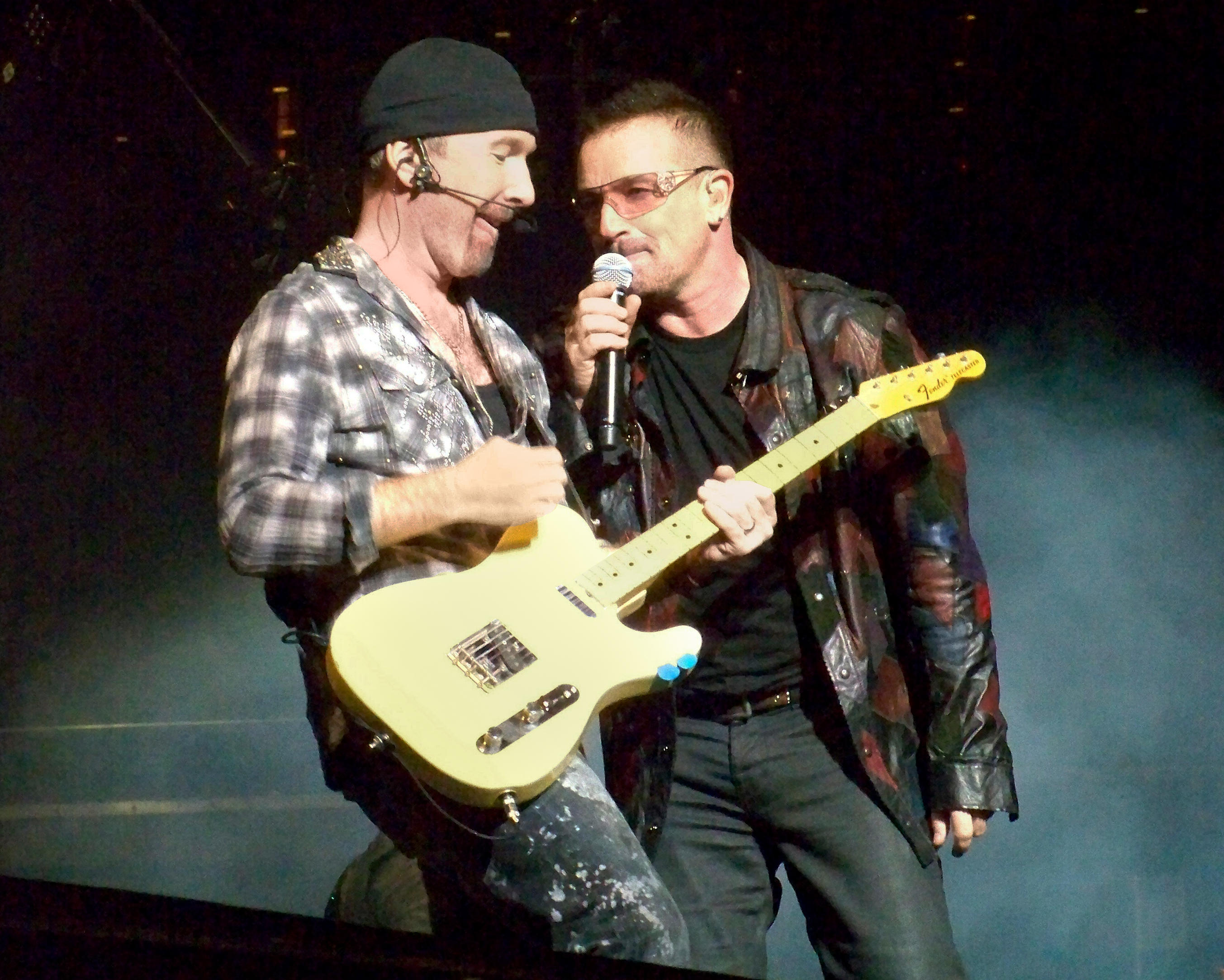
Image result for bono and edge 2008
"Bono, not the Edge"

Bono, not The Edge. You know, The Edge is the maven, Bono is the evangelist. Steve Jobs, Steve Wozniak. You see these pairs.

And the relater? Where does the relater fit in? The relater feels like a third wheel to me, in your model. And that’s because you’re probably describing yourself that way.
That’s where I’m sitting, yeah. I live in that region of the world. The relater is the glue. The relater is, if we have The Human Fabric as the title of the book, the relater is the weaver of the human fabric. What they do is, mavens pick an area of the world and they study it. Relaters pick people. For relaters, people are the thing. And people are this infinite puzzle, and they’re just so interested in people. Oh my gosh, your journey, and how’s your day, and all this stuff. What they’re gathering data on is this entity called a person. And where they are. And then you should really talk to this person. My youngest brother is a total relater. and I have these great relaters in my world, and I look at what they do, and it’s incredible. It’s sometimes really frustrating, because as a maven or an evangelist you don’t think of a person as a universe unto themselves. but a relater does. So they’ll sit there and if you say, tell me about Joe, they’ll go oh, you know, and 20 minutes later you’ve got a soliloquy on Joe. And I’m like no, don’t tell me that much. What they’re doing, and this is the interesting thing, is I always used to draw the triangle as maven, evangelist, relater, like that…

Maven at the top.
Maven at the top. I didn’t know why. But I learned later that a model is already communicating information when you place the elements. So my friend Tina, who did the book cover, she has a company called Spoon Bend, it’s a graphic design marketing company. She took the triangle and she tipped it; and she also did three paintings that illustrated the energies of these three. She tipped it forward, and all of a sudden it all made sense. Because the evangelist was on the ground, pulling the triangle. the maven was stepping up on the top, and the relater was in the back, connecting, making sure everything is good, but taking a quiet role. That’s the thing with relaters is you can tell who the mavens are, you can tell who the evangelists are, the relaters are in the background - they’re the unseen third. But really each of these two resolves the duality for the other. So when the maven and the relater have a conflict, the evangelist can come in there and broker that discussion, because all of their energies are in a tight triangle like that. So, relaters are incredibly important.
Societies also fall into the triangle. Think of America: evangelist-maven. Right? I mean our dominant is we’re evangelists out here, we’re the Wild West, those are our heroes. Relaters don’t get much play here. Whereas in Japan, that’s a relater-maven culture. What’s Japan all about? It’s how you treat each other, how you interact. Whenever you’re looking for a culture’s energy, look at what they formalize. Germany: mavens. Uber-mavens.

You mentioned Hong Kong. Did you grow up in Hong Kong?
Yeah.

So how would you describe Hong Kong?

Image result for hong kong at night 2005
Hong Kong at night

Oh, evangelist. Very clearly. Which is interesting. Hong Kong and Singapore have an interesting relationship, because Singapore to me is maven, Hong Kong is very evangelist, and I always thought the obvious thing for them was to hook up and start, you know, getting all the business people in Hong Kong talking to the inventors and technologists in Singapore. That would be my economic prescription.

Tell me a little bit about Bootstrap Austin and your involvement with it.
I inadvertently stumbled into another model, which is bootstrapping. I would say bootstrap is the third way of entrepreneurship. So when we think about entrepreneurship, we think of it as one activity, and it’s not. It’s an infinite set of activities. I like to break things out into three. I think of the cookie cutter entrepreneurs, the funding-driven entrepreneurs, and the bootstrap entrepreneurs. Cookie cutters are anything from franchises to any business whose business model is already known. Doctors, lawyers…

Widget sellers…
Widget sellers. Someone else has already discovered the business model, and now you’re making one of your own, but you’re not making anything new. The new seems to always come from Silicon Valley, where you throw money at it, and you IPO it, and all that. But it turns out that bootstrapping is really the way that built-to-last companies get built. Microsoft, HP, Oracle, even Google…

So what is bootstrapping? What does that mean?
It means a lot of things. The simplest way I think of it as, from a business model point of view, is that the business model emerges from the process of bootstrapping.

And the process of bootstrapping is…
Is right action, right time. It’s demo, sell, build. It’s constraint creates innovation. It’s use everything. It’s most described by a story about Baron Munchausen. He supposedly found himself in a swamp. He’s drowning in the swamp, yelling for help, trying to get out of the swamp, no one’s there to help him. So he said well, I’m either going to be dead, or I’m able to get out. What am I going to do? I can’t get any help.

Baron Munchausen

He looks around and sees his bootstraps, and pulls himself up by his bootstraps, and gets out of the swamp. There’s a competing myth which is that he pulled himself out by his hair, but "hairstrap" doesn’t quite roll off the tongue. So bootstrapping is that story. Wherever you are you can make progress. You can create something out of nothing. And what happens with people, is we often fall into “well, I don’t have what I need, I need to do this big thing so I need to go get resources from an external source.” That’s why Ir think of it as right action, right time. You are essentially letting something unfold and evolve and emerge, and you’re the shepherd of that emergence, you’re not the author and the controlling entrepreneur.

So it lends itself more to collaboration.
It does. It is fundamentally a co-creative process. You’re co-creating your ventures with your partners, with your customers, with the world. You’re on this journey of diminishing yourself into the right spot, and you’re watching what’s happening, and as you get better at watching, you make progress.
So we have this model, this map that we built, and it talks about the different elements that keep showing up. Each stage is nothing more than the birth of an element. So the “You” stage, the first stage, is the birth of you. What are your unique talents, what are your unique passions, what are you good at.
Once you start figuring that out, then you get into the “You plus You” (now called Quest(ion)) stage, where it’s like “Oh my gosh, do I want to go on this hero’s journey?” This is Joseph Campbell and all of that. Because many people are called, few take the action. That means that you’re going to go on this journey away from what society tells you that you’re supposed to do.
And if you say yes to that, then you enter into the “Ideation” phase. What are you going to do? That’s the birth of your “it.” Your product, your service, your experience, your cause, your community, whatever it is that you’re going to make. And then once you do that, you enter the Valley of Death. And then you’re on the hunt for this  customer. You’re like, oh my gosh, someone please pay me for what I’m doing so I can be sustainable.


The Hero's Journey

But all these elements keep going. The You still keeps going, the Inner Journey keeps going, the Product Journey keeps going, and the job of us as the entrepreneur is to weave them and integrate them together, so with the addition of a new element, kind of like a fugue, the addition of a new element doesn’t disrupt, but it forces and harmonizes with the previous elements.

I see this mental map as an animation. I mean, I imagine that it would be really useful to people. If mental mapping is about visualizing the process, or an idea, this is a particularly fluid process, as you describe it, as a fugue, as music. I wonder if you’ve ever thought about animating your mental maps.
I haven’t, but I’ve done some half-assed attempts in Power Point to show the elements coming in. But again I need my power of two on that.

Well I’m not the one to help you I’m afraid!
Thank you for illuminating a gap in my power of two (laughs). And not helping me at all.

You’re so welcome! As a relater maybe I can find somebody for you.
There you go.

Getting back to mental maps, or mental models. You say mental model, and a lot of other people say mind mapping, and I wonder if there’s a difference in your view about those two things.
Well, yeah. Mind Mapping is a very technical term where you essentially brainstorm by putting an idea in the center, and sort of spiking out. I remember when I discovered mind mapping in college. I was doing a research project in India, and I discovered mind mapping, and all of a sudden my world opened up, because it’s more mapped into the network structure of the brain. But a model is just a representation of reality. So a mind map could be a representation underneath that, but mind maps are subsets of all models.

Mind maps don’t work for me, and I think that has to do with how I learn. But I wonder if you run into this also with mental models. Are there people who absorb that information better and worse? Are there people who find this more or less useful? What is the response to mental models?
I think there’s a whole variety of responses. My models occupy the simple but not simplistic spot. My models are bootstrapping you into your mental models, if you like, to be sort of self-referential. Because I don’t want to give you the whole answer. What I find is mavens are the most dubious about my models, because I reduce them down.
I remember this art project that I did in 8th grade. I had a block to carve. And I started carving, and I had this elephant. My elephant was just this blocky thing, because I was afraid to cut too much, because you couldn’t glue it back on. That’s where I feel people are with mental models. And I’m always, like, cut, cut, cut down to the bone, so I can get to the essence. So when I say people fall into one of three categories, maven, relater, evangelist, both the mavens and the relaters go “noooo, that can’t be right.” Evangelists are like, “sweet, that’s easy, that’s quick, I need a quick model I can use,” so they’re good. Mavens are like, “that can’t be right. Really?” Because they look at people as mysterious.

And relaters like me say “but I’m all those things”
Exactly.

Because they relate.
Exactly. And “oh, people are so varied.” That’s where I get the resistance. Bootstrap, you get resistance from the other two sides. The cookie cutters go, “well, I want control over this, I’m not going to let it just go out.” And, “I need a business plan,” and stuff like that. And the funding-driven guys go, you know, “what are you talking about? I’m the master of the universe. I know what’s gonna happen, so why am i gonna let the process deliver?”

But you’re not creating the model for them.
Right.

So that’s okay.
It is, you’re right. That’s the subtlety of why I go slow with all this stuff, because I don’t want people to take my models and make them their reality. I want them to say, this is just showing up here. You asked about Bootstrap Austin. It started because I was even more convinced after my tech start-up deal, where I had raised half a million dollars from friends and family, spent it all, and found myself with nothing to show for it, going why didn’t I trust myself? I’m a bootstrapper, I knew about bootstrapping. I didn’t know the whole model. But I started with it back at Stanford.
I knew that was my path, not the Silicon Valley dominant path. What’s the founding company of Stanford? HP. Bootstrap. Scott Cook came and spoke, the founder of Quicken. Bootstrap. Oracle: bootstrap. And yet I had allowed myself to go away from my own intuition. So I was talking to a lot of entrepreneurs, and they wanted to get funding. This was 2002, 2003. And I said “dude, you want to bootstrap your company. You want control,” and so on and so forth. I was having all these lunches, coffees, and dinners, and it started to get to be a real pain. So I thought, I’ll get these people together, I’ll introduce them to each other, and that’s how Bootstrap Austin was born.

Bijoy, thanks for your time today, and good luck with SXSW and your upcoming projects!

Bijoy's Amazon list of suggested reading material can be found here.
Paintings by Tina Schweiger.

Sustainability Meeting - Wed. 26th

Looking forward to the meeting at Quack's 43rd St bakery at 6:30 PM. I hope to bring up 350.org and the events planned for Oct 24th. You can see Bill McKibbin talk about it here.

Tuesday, August 18, 2009

Invitation to Austin Rude Mechs Sci-fEye Ball this Saturday


You may know "When Worlds Collide" as a 1930's Science Fiction novel and 1950's academy award-winning film. But if you want to see Austin's worlds collide - including the worlds of non-profit and for-profit, hip and square, young and old, arts and technology, just to name a few - you should beam yourself over to the Rude Mechs Sci-fEye Ball benefit this Saturday (8/22/09) at the Off Center. 7 PM to midnight at the Off Center (2211 Hidalgo, Austin, TX 78702). If you'd like to know more about the Rudes, please check out the following URL: http://www.rudemechs.com/about/index.htm

Thursday, August 13, 2009

Conjunctured's One Year Anniversary: Congratulations!

Our friends, supporters, and fellow Bootstrappers at Conjunctured Coworking are celebrating their first anniversary Saturday night at 7pm. Bootstrappers are invited to raise a toast or two, and also to be aware of the one week free trial using their coworking facilities. They're at 1309 E. 7th Street.

Tuesday, August 11, 2009

What is your QUEST(ion)?

An article I wrote for the May launch of Austin Performance Magazine.

Every person, every organization, is engaged in asking its unique and very important question. Although people focus on mission statements, values, and goals, the thing to figure out is your question. Because your QUESTion is your quest.

The answer to that question evolves over time. Apple asks: how do we make delightful technology? (I am experiencing the delight with my recent purchase of an iPhone!) This is also the question Steve Jobs, Apple's (bootstrap) founder has asked. Their first answer 33 years ago was a wooden box that looked different than other build-you-own kits. Now it's an iPhone and iTunes. But it is all an answer to the same core question. The Virgin Group asks: how do we make life an adventure? All their companies, from Virgin Mobile, Virgin Atlantic and Virgin Galactic are engaged in discovering the answer. Again, this is the very question Sir Richard Branson, Virgin's (bootstrap) founder, has asked all his life.

My QUESTion: how do people and organizations live their most fully expressed lives? More ambitiously, how do we understand the universe and make our way in it? This has resulted in many different answers over the years, but most recently, in the creation of various mental models. I use my models to help people and organizations on their path. I was not always aware of my question, but it has always been with me. Recently I had an old 6th grade friend contact me on facebook, and at first I didn't remember him. He reminded me I was the Bijoy that used to give people advice and help friends with all their problems. Universe, I shake my fist at you, my question has been there all along!! (thanks Bruce)

A simple equation has emerged in answer to my question: you + U = ?! You and the Universe in a dance, co-creating your life. The first challenge is to figure out who You are uniquely and what you're here to do by discovering your question. This turns out to be at once more simple and more complex than we might think. (Our July theme at Bootstrap Austin was "know thyself") Einstein discovered his first question in his teens - what's it like to ride a light beam? When he answered this question at the age of 27 (ten long years later!), he realized it was part of his larger life question: how does the universe work? Sometimes it takes a jolt to thrust you into your question. Stephen Hawking was a bright, but unmotivated physics student at Oxford. At the age of 21, he was diagnosed with ALS and given a two-year death sentence. This prompted him to get serious about his question: how did the universe begin? He's been pursuing it now for 46 years.

But discovering "You" is not enough. The Universe, or "U" constitutes the second (and much bigger!) part of the equation. While this has traditionally been the domain of philosophers, theologians and scientists, we should not shy away from the task of coming to our own understanding of it. A model I use is embodied by the yinyang - specifically seeing it as a diagram about time. Imagine traveling along the border, exploring two seeming opposites. As they circle around, each is explored to the exclusion of the other. After much iteration something new appears: the integration of the opposites! The universe seems to be doing this at every level. Physicists understand that two huge forces - dark energy and dark matter - are in a cosmic dance since the universe began. Dark energy pulls the universe apart, expanding it into space, while the dark matter holds galaxies together.

Being a part of it, we experience and explore these dualities as well. We might think of them in human terms: love/money, dependence/independence. Or in Einstein's case, he unified light from a particle/wave to photon; with e=mc2, he unified energy and matter. Google unified democratic free search with paid search by creating two search engines in one.

When we understand the universe, we can let it do its thing and engage with it. You wouldn't want to take over gravity - that's the universe's job! All the resources we need to come to our answers - the heavy lifting - are provided by the U. Be patient, something larger is unfolding and waiting to be revealed. It's especially important to keep this in mind when things don't go our way. When Einstein found himself sidelined for a professorship after completing his PhD, he got himself a job as a third-class patent officer. Not only did this give him ample time to ponder his question, but he examined a profusion of patents on clock-synchronization. What was the key insight that led to the theory of relativity? Two clocks cannot be synchronized and time is not absolute.

The starting point for this unfolding process and what is totally in our control is our question. This naturally leads us into the exploration of a duality and its integration.

Returning to business, the entire discussion usually revolves around business models. How do you take the various elements in the world, configure them in such a way that you're providing value to your customers? This is the integration. Most businesses don't know their model when they start. Southwest Airlines didn't know they were building a low-cost, point-to-point, Boeing-737 airline powered on love. It took ten years to figure it out and the same is true of Apple, Google, Microsoft, etc. - all unfolding in spacetime.

We can now see that a business model is nothing more than a temporary answer to the core question the company is asking itself. Getting attached to a particular business model is what ensures the quick demise of a business. The challenge for founders and leaders interested in building long-lived businesses that continue after their involvement, is to impart their question to the company.

The model I use for businesses to live their question and discover its manifold answers is bootstrap. But that's for another time. For now, I leave you with (what else!) a question: what is your QUESTion?